|
Title: Thirst for Your
Savior
By Pastor Lohn Johnson
|
||||
|
Text: John
7:37 On the last and
greatest day of the Feast, Jesus stood and said in a loud voice, "If anyone is thirsty, let him come to me
and drink. 38 Whoever believes in me, as the Scripture has said,
streams of living water will flow from within him." 39 By
this he meant the Spirit, whom those who believed in him were later to
receive. Up to that time the Spirit had not been given, since Jesus had not
yet been glorified.
INTRODUCTION: My dear
friends in Christ, Thirst is something
we have all experienced. Maybe not
quite like this, but it does make a point for us: [Video: Three Amigos –
dying of thirst scene] In a way those
three Amigos represent how we handle our thirst, which we will see in a
minute.
 |
||||
|
I.
Jesus understood the importance of drinking
water. He cried, “If anyone thirsts, let him come to Me and drink.” Now notice that Jesus does not simply say,
“Come to Me and drink.” He says, “If anyone thirsts, let him come...”
|
||||
|
|
A. Our human body is designed in such a way that it
needs water even when we are not aware that we need it. Anyone can feel thirsty after working out
in the hot sun. We drink a lot of
water very quickly at such times. But
when we’re not perspiring, not out working hard, our body deceives us. It still needs water, but we are not
thirsting for it, and so it’s easy to go through the day without stopping at
all to grab a glass of water. The same
is true of us in a spiritual sense. Jesus has the only water that quenches
our thirst spiritually. We need Jesus,
the Water of Life. So often we aren’t aware of this or ignore this fact.
|
|||
|
|
1. But much of the world doesn’t even
know about spiritual thirst at all.
And there is much thirst out there. The world is devoid of grace and
dying of sin—that’s thirst.
|
|||
|
|
a. Too often,
however, the thirst goes unnoticed. The world has no Promised Land to look
forward to, so it does its best to make the desert look like paradise. To make the desert look inviting, the world
produces idols like materialism, promiscuity, and selfishness, in order to
make this wilderness seem like paradise. But none of these things offer
eternal life. There is great thirst, and the world is dying as it seeks to
make the most of itself. This may be like the Martin Short Amigo, who only
got dirt out of his canteen.
b. And the world
often goes further than merely dying of thirst. The world contends with God
and shows contempt for His salvation. Christ and Christianity are seen more
and more as politically incorrect and the white man's imposition on the
world, while the Gospel is held in contempt. People look anywhere for
salvation but to the Savior as they place their hope in false gods, their own
works or inner meditations. The thirst is great, and sadly many are
dying.
|
|||
|
|
B. And even among
Christians, who were raised on the living Christ, get into the habit of
drinking less and less of Christ here, so that many weeks and months go by
and they are not even aware that their eternal soul is dying of thirst. We may become like Steve Martin’s Amigo –
only a drip of water which can be reduced to dust.
|
|||
|
|
1. We can
even become a lot like this:
A
wealthy family from Massachusetts used to take a month’s vacation every
summer to the coast of Maine, taking their maid with them. The maid had an
annual ritual at the beach. She wore an old-fashioned bathing suit, complete
with a little white hat, and carried enough paraphernalia to stock Wal-Mart.
She would settle herself on the beach, cover every inch of her exposed flesh
and journey down to the water’s edge. There she would hesitate while taking
deep breaths and working up her courage to enter the icy-cold water. Finally,
she would daintily extend one foot and lower it slowly into the water until
she barely had her big toe submerged. Then she repeated the act with the
other foot. Then, having satisfied her minimal urge for a swim, she would
retreat to her chair and umbrella and spend the remainder of the vacation
curled around a book.
I’m afraid that may be a parable of our partaking of the water of
Christ. We come to the point where we
touch our toe to the water and flee, going back to being oblivious among our
distractions.
 |
|||
|
|
2. But Jesus does not just love His Christians who
faithfully drink of Him. He also loves those who are not very thirsty. He loves those who don’t know they thirst,
too. And He does not want any to die of thirst apart from Him. And so Jesus does something wonderful for
us. We may not think that it’s too
wonderful, but it is. He allows us to become thirsty.
The hot sun can drive a person to his bottle of water. So Jesus allows His Christians who are not
feeling much of a thirst for Him to become parched and dried out from
troubles, pain, and suffering. He
allows such problems to come into our lives so that we thirst for our Lord in
ways that we were not thirsting before we had troubles. He also works to bring those who don’t know
they thirst to realize their thirst, often in the same way.
|
|||
|
|
a. Just as any
good father does not shelter his son from hard work, or from the sweat, and
aching muscles, and the unbearable thirst that comes from such work, so God
does not keep troubles from coming to us, for without them we may not
thirst for His Word and Sacraments.
Without struggles, pain, and sufferings we may lose the habit of
drinking of our Savior often.
b. We should not
groan, therefore, when troubles come in life.
We should not pity ourselves, or complain that God is forsaking
us. Just the opposite. Whatever suffering you and I are enduring,
see the grace of God behind it. He allows
it because of His love for us. He
desires greatly to keep us thirsty in our life; thirsty so that we have the
habit of drinking Jesus regularly. And
whoever is thirsty, Jesus promises that he or she can come to Him and
drink. He will not turn us away. All who come to Him may freely drink of
Him.
c. In other words, this living water always flows towards
the desert, the parched land, and where the desert is the greatest and the
human needs are most painful. The living water always finds its way there.
The stream of living water finds its ways to the parched, brown land of human
suffering. Pentecost signifies the mighty rivers of God suddenly flowing into
the people. Maybe a little like Chevy
Chase’s Amigo, without the selfishness and silliness– because he had an
abundant supply.
|
|||
|
II. “If
anyone is thirsty,” Jesus says. As
He was dying on the cross, Jesus cried out, “I thirst.” But His thirst
was not for water; His thirst was for us.
His thirst was to set us free from our sins. His thirst was to remove God’s curse from
us. His thirst was to bring us to God
through His own blood. Jesus’ thirst
was quenched. He did what He set out
to do. And now He wants us to thirst
for Him. Not just now and
then...always, daily, weekly, all your life.
And to everyone who thirsts, Jesus gives that one living water to
drink.
|
||||
|
|
A. He cries out
the good news, the truth: Living water is found in Him, and He is the only
source of salvation.
|
|||
|
|
1. The people
cannot be saved by the dry dust of the Pharisees as they teach their many
rules and regulations. They cannot be saved by the parched promises of the
Sadducees with their "eat, drink
and be merry" lifestyle. They cannot be saved by the deluded deserts
the world offers. They will be saved by the One who dies in their place, who
takes upon Himself the burden of their sin, who thirsts on the cross as He
suffers the wrath of God for the sin of the world.
2. He gives you
living water. He who died for you, but
now lives, comes to live within you. He puts His Spirit in you as His words of
grace and mercy come into your ears.
And the more you drink this living water, the more you desire it, the
more you thirst for it, and the more your faith in Christ is strengthened,
the more assurance and confidence you have in your living God.
|
|||
|
|
B. On Pentecost day, the Lord sent the
Holy Spirit; and it is no coincidence that the Spirit's coming was followed
by preaching the Gospel, by Baptism and by the Lord's Supper. These are the
means by which the Spirit works to pour the water of life into the people of
the world.
|
|||
|
|
1. Now as we
proclaim to you the Word of God, the Spirit is at work to bring Christ to
you, that He might forgive your sins and dwell within you. The Holy Spirit
brings your risen Savior to you this day, that Christ might cleanse you of
sin and satisfy your thirst with living water, that you might be His people forever.
The Holy Spirit works through the Word of God. We proclaim to you the Word of
God, and living water flows to you.
 |
|||
|
|
2. We also rejoice
that the Holy Spirit works through the waters of Holy Baptism.
|
|||
|
|
a. For the
youngest infant or the oldest man or woman, the Holy Spirit delivers Christ
by water and the Word. There He washes our sins away; there the only-begotten
Son of God makes us sons of God and heirs of His kingdom. By water and the
Word, the Spirit delivers Christ; and Christ delivers His living waters of
salvation to us, that we might be His forever.
b. What comes to your mind when you think about
water? The seashore? A beautiful lake?
Swimming? Fishing? A cool drink on a scorching day? If we could ask Helen Keller that question,
she would probably say, "a water
pump," because it was at a pump that this blind and deaf girl
learned that things have names. [Video Disney’s Miracle Worker] She was brought to realize – to connect the
substance water to the word water. And
a whole new world opened to her.
Likewise Baptism opens up a whole new world to all of us. The next time
you take a shower or a swim, or the next time you take an icy drink on a hot
day, remember your baptism. Water is the outward element used by God to give
you his Spirit.
|
|||
|
|
3. Furthermore,
the Holy Spirit delivers Christ to you in the Lord’s Supper. Jesus, who
turned water into wine at Cana and who multiplied bread for the 5,000, now
gives you His body and blood in with and under the bread and wine of the
Lord's Supper. There He grants forgiveness and nurtures faith; there He
strengthens and preserves us in the one true faith.
|
|||
|
CONCLUSION: Pentecost
is the signal for us that the supply of the water of Christ never dries
up. God’s love never dries up. Our love dries up; my love dries up; your
love dries up; but God’s love, the Holy Spirit alive in us, keepings flowing
and flowing. In Word and Sacrament it
keeps flowing in a flood to us. Never fail to Quench your thirst with this
water. Amen.
|
||||

Notes from GSLC Sermons, Bible Studies, and other church events.
Friday, June 13, 2014
Thirst for Your Savior

Wednesday, November 20, 2013
Not a Hair on Your Head will Perish
|
Title: Not a Hair on Your Head will Perish
By Pastor Lohn Johnson
|
|||||
|
Text: Luke 21: 17 All men will hate you because of me. 18
But not a hair of your head will perish. 19 By standing firm you
will gain life…. 27 At that time they will see the Son of Man
coming in a cloud with power and great glory. 28 When these things
begin to take place, stand up and lift up your heads, because your redemption
is drawing near."
INTRODUCTION: My dear friends in Christ, The family heard the tornado warning on
the radio. They went out on the front
porch and looked at the sky. And then they saw it: a funnel cloud swaying
along the ground like a hungry elephant's trunk sucking up everything in its
path.
They made a run for it -- the father, the mother and two small
children. They lay flat in a nearby ditch. They heard the roar of a freight
train, which is the characteristic sound of a tornado. The rain came down in
torrents. Small tree limbs rained down upon them. Then they heard a loud
crashing noise as if something big was being torn apart.
In what seemed like an eternity, but was only a few minutes, the
storm passed, the wind died down, the rain stopped, the sky began to clear,
and an eerie silence settled around the huddled family. Slowly they climbed
out of the ditch. They were shaken and soaking wet but, thankfully none of
them was hurt.
"Where is the house?"
six-year-old Amy asked.
In place of the house there was a desolate empty space against the
sky. All the family could see was a pile of bricks with not one brick left
upon another. Wooden beams were piled helter-skelter like so many oversized
matchsticks.
"It is nothing but a pile of rubble," mumbled the
father. The family huddled together, hugged each other and cried.
"Where are we going to live? Where is all our stuff? This
makes no sense," shrieked ten-year-old Andy.
Nobody offered an answer. Slowly they moved toward the wreckage of
their home. For a while they simply
stood there. They had no words.
Then Amy cried out, "Where is Kitty Cat? I've got to find
Kitty Cat!" Amy began to pick up small pieces of debris. She turned
over broken boards. All the while she called, "Kitty Cat! Kitty Cat!
Come here, Kitty Cat." Her mother watched sadly and thought to
herself, "She will never find that cat. It is either crushed under
all this rubble, or it has been blown away over the fields. Amy loved that
cat. She will be devastated."
Just then Amy heard the faintest little mewing sound coming from
among the rubble. "Kitty Cat! Kitty Cat! Where are you? Where are you?"
Kitty Cat, wet and bedraggled, came struggling from under a broken board
which was resting on some bricks. The board and the bricks had formed a little
shelter which protected the kitten from being crushed or blown away. Amy was
ecstatic. She picked up the dripping kitten and cradled her in her arms.
Amy's tears turned to joy.
For her there was good news among the rubble. A living being which she prized had survived the destruction of a
terrible disaster.

The entire family shared Amy's joy. In fact, the father suggested:
"Why don't we give that cat a real name? Why don't we call her
'Hope'?"
|
|||||
|
I.
Rubble
in abundance comes to mind as we listen to the words of Jesus from our text.
And yet here among this rubble is “hope” even more so, than for that family.
|
|||||
|
A.
Jesus was walking around the temple
courts during what we call “Holy Week,”
the week leading up to His death.
|
|||||
|
1. The temple
was undergoing an extensive renovation under King Herod who was trying to
curry the favor of the Jews, seeing as he wasn’t one of them but wanted to be
their king.
|
|||||
|
a.
The temple that had been built after
the return from exile was built on a bit of a shoestring budget, you know how
renovation projects can be, and so Herod was throwing a bunch of money at the
temple to bring it up to Solomon’s specs, hoping the people would love him
for it.
|
|||||
|
2. Remember
that the temple was the national and religious center of Israel.
|
|||||
|
|
a. It was the place where the glory of God had formerly
dwelt. It once held the ark of the covenant with its mercy seat. It still was
a place of sacrifice, though the sacrifices had become mechanical
transactions. The temple was still the center of Israel’s religious life,
it’s history, it’s dreams, hopes, expectations.
b. When Messiah
comes, he will restore the temple, they thought. And Jesus says, “the days of this temple are numbered.”
That’s a bit like saying the word “bomb” in a TSA line in the airport. It
could get you crucified.
|
||||
|
B.. But it happened just as Jesus
said. The end of the temple was signaled on that upcoming Friday, when the
curtain was torn in two from top to bottom as Jesus died. The time of the
temple was over.
|
|||||
|
1. On
that Friday Jesus is crushed under the rubble of our sin, a little
like that kitten. And on the third day
He emerged from the rubble the new temple of God.
|
|||||
|
a. From that point on, God was to be
approached through the death of His Son. No longer a building, now a body. No
longer through the blood of bulls and goats, but now through the blood of His
Son.
|
|||||
|
b. It took
nearly forty years for God to dispose of the temple at the hands of the Roman
army, but that’s how God works. He’s in no hurry; when God has spoken, it’s
already done.
|
|||||
|
2. In a very real sense, all the
events of the end have already happened on that one, dark death on a Friday
afternoon when the Son of God in the flesh hung on a cross and cried “It is finished.”
|
|||||
|
a. There the world is judged and condemned by God under
the Law for our sin. There the world is saved, atoned for, redeemed,
reconciled to God.
b. So as you go about your days in these last of
days, remember that the One who comes
in the clouds with power and glory is the same One who came by a virgin
Mother and a manger and a cross to save you.
|
|||||
 |
|||||
|
II. Do you
get the impression that end times living is not exactly a bed of roses?
You’ve got it right then! The fall of Jerusalem and the destruction of the
temple are a picture, a type, a pattern, for the end of all things on the
Last Day. Jesus prepares His disciples for hardship
and persecution. Don’t expect things to get better, just because the Son of
God became flesh and dwelt among us. Things will get worse –End times living
is not easy. Jesus never said it was. This universe is tumbling toward its
death, and the death throes are never pleasant.
|
|||||
|
A. But we are
in God’s protective ark, the Church, made not with human hands but by the
hand of God Himself. Not being built from the earth, but coming down from
heaven.
|
|||||
|
1. It occurred to me as I reflected on Jesus’ description of
the final judgment, that in a sense, the Second Coming has already occurred.
|
|||||
|
a. Not the Final Coming, mind you, but a Second Coming
where Christ identifies himself with His Church on earth.
b. I repeat, in a sense Christ has returned already, and
he is now exactly where he spent his life — among those who need him the
most. He is here among His people in Word and Sacraments to give out His
blessings of forgiveness and life.
|
|||||
|
2. And so,
when you see the signs of the end, this distress and darkness and destruction
that mark the last days and foreshadow the Last Day, then “straighten up, lift up your heads, because
your redemption is drawing near.”
|
|||||
|
a. Notice
that. Your redemption
is drawing near. Not your destruction. Not your demise. Not your death. Your
redemption.
b. He’s
already gone down that Last Day road ahead of us, through the darkness,
through the death, through the persecution and destruction. And He has come
out alive, risen from the dead, glorified. And you, baptized into His death,
are alive and glorified already in Him.
|
|||||
|
B. Although Jesus paints a stark picture of what the road
to “the end” looks like, he did so
not to stir up worry in his people but to do the exact opposite (Luke 21:9).
|
|||||
|
1. He told us the truth of what was coming so we could have peace.
|
|||||
|
a. It’s the kind of peace a child has when his father
warns him ahead of time that thunder is coming or that the road is getting
bumpy.
b. It’s the kind of peace that says to your soul, “Even though you have to endure, you’re
going to get through it.”
c. It’s the kind of peace produced by the fact that when
trouble does arrive, it proves only that Jesus is surprised by nothing
and therefore capable of everything.
|
|||||
|
2. Finally, Jesus urges us to live with a constant focus on how this story will end. Admittedly, all of this is easier said than done.
|
|||||
 |
|||||
|
a. So in His strength He calls us to
live with our hearts and minds anchored in the fact that in the end, no
matter what happens, we will be okay.
b. Sure, the things might get scary, but when all is said
and done his people win, because He won. And in a way Jesus spoils the ending
-- well, not really -- by promising that, "not a hair of your
head will perish.”
|
|||||
|
CONCLUSION: Maybe we
can summarize what our end times attitude should be with this story: A man
named John Wilson writes about his father‑in‑law. He says his father-in-law
was a lifelong Bible teacher. However, his father-in-law found his faith
troubled in his final years. A degenerative nerve disease confined him to
bed, impeding him from most of the activities that gave him pleasure.
Meanwhile, his thirty-nine‑year‑old daughter was battling
a severe form of diabetes. Financial pressures mounted. During the most
severe crisis, his father-in-law composed a Christmas letter and mailed it to
others in the family. Many things that he had once taught, he now felt uneasy
about. What could he believe with certainty? He came up with these three
things. These were the three things he believed regardless of what life may
send his way: “Life is difficult. God is merciful. Heaven is sure.” These
things he could count on. “Life is difficult. God is merciful. Heaven is
sure.” When his daughter died the very next week after mailing his letter, he
clung to those truths ever more fiercely.
What he was saying was that though life sometimes gets
tough, ultimately, not a hair on our head will perish. We are in God’s hands.
He will not let us fall.
|
|||||
Tuesday, November 5, 2013
All Saints Day – What does “blessed” mean?
|
Title: All Saints Day – What does “blessed”
mean?
By Pastor Lohn Johnson
|
|||||
|
Text: Revelation 14:13 13
And I heard a voice from heaven saying, "Write this: Blessed are the dead who die in the Lord from now on."
"Blessed indeed," says
the Spirit, "that they may rest
from their labors, for their deeds follow them!"
INTRODUCTION: My dear Friends in Christ, Some of you may remember years
ago when the irreverent British satirist known as Monty Python produced a
movie called Life of Brian. One thesis of the movie was “what would happen if some of Jesus’
teachings had been mis-heard?”
[Video: There is a scene which begins with Jesus on a high
rock surrounded. We hear his words loud and clear:
Jesus says: “How
blest are the sorrowful, for they shall find consolation. How blest are those
of gentle spirit. They shall have the earth for their possession. How blest
are those who hunger and thirst to see right prevail. They shall be satisfied
. . .”
Then the camera pulls back to the back of the multitude
which is a long way off.
An old woman shouts: “Speak
up!”
Her son tries to shush her. But she protests. “Well, I can’t hear a thing! Blessed are
the what?”
Another man tries to help: “I think it was “Blessed are the cheese-makers.”
And the old woman asks, “What’s so special about the cheese-makers?”
Another man interjects, “Well, obviously it’s not meant to be taken literally; it refers to
any manufacturers of dairy products.”
The Life of Brian portrays Jesus as a sincere
teacher and leader, but it is the listeners who get it all wrong and they
quarrel and squabble all through his sermon.
That
is often the case, is it not? The problem is not in the teaching. The problem lies in us as we try to understand and apply Christ’s
teachings.
|
|||||
|
I.
Case in point is the word “blessed.”
|
|||||
|
|
A. When
we say blessed, we usually think happy, healthy, wealthy, fortunate as we “count our blessings” and consider how
“blessed we are.”
|
||||
|
|
1. When
Jesus says, “Blessed.” It certainly
doesn’t seem like the world’s idea of “blessed,”
does it? He uses words like: Poor, mourning, meek, hungry, thirsty, merciful, pure hearted,
peacemaking, persecuted, none of them seem blessed to us.
|
||||
|
|
a. Where’s the
Bentley, the vacation home, the Jacuzzi, the party life, the glamour, the
celebrity?
b. But Jesus is
describing God’s way of blessing – back-handed, upside-down, inside out,
opposite, hidden. To be blessed from God’s perspective, is to be on the
privileged receiving end of God’s good stuff. So God’s idea of being
blessed is to recognize an existing state of happiness or good fortune that
comes from Him.
|
||||
|
|
2. So from God’s
perspective you are Blessed.
|
||||
|
|
a. You are blessed
even when others revile you, make fun of you, kick you, exclude you, insult
you, slander you. Maybe you will feel
a little like this: [Video]
b. But unlike our
clip, it’s not you they are insulting, it’s Christ. And that’s cause for
rejoicing, because you and Christ are one. Your trust will be vindicated.
|
||||
|
|
B. When Jesus stood
on the mountain to teach His disciples, He was preparing them for the
realities of living in the in-between time of the now and the not yet. When
he pronounced His blessings over His disciples, they are all tied up in the
now but He was looking toward blessings that have not yet come totally into
fruition.
|
||||
|
|
1. The same is true
of us. We are “blessed.” But we too are caught in the now. Some aspects of our “blessings” have not come
totally come to fruition yet. Trouble
that does not seem like a blessing still comes to us.
|
||||
|
|
a. You will be
blessed. That is sure. But that blessing will come hidden in, with, and under
trouble for now.
b. Just as Christ
appears in this world weak and crucified, so His church appears in this world
as weak, persecuted, deluded losers.
|
||||
|
|
2. Don’t expect this life to be easy. Don’t
expect a divine bailout for your problems. Don’t expect a miracle lurking
around every corner.
|
||||
|
|
a. Expect to feel your spiritual poverty,
expect to mourn, expect to be treated like a doormat by this world, expect to
be persecuted in response to your mercy and peacemaking and purity of heart.
b. They don’t give Nobel Prizes for being a
disciple of Jesus. Expect trouble,
now. In fact, be suspicious when things are going peaceful and well.
|
||||
|
II. But we have to understand one more thing
about being “blessed.” Because to get the idea of “blessed” right you have
to get Jesus right.
|
|||||
|
|
A.. He
alone embodies all the aspects of being “blessed” in Himself.
|
||||
|
|
1. You don’t, nor do I. We are anything but meek, merciful,
pure hearted peacemakers. Not by nature. Not in ourselves.
2. Christ alone is all of this. He embodies these beatitudes
perfectly.
|
||||
|
|
a. He is poor in spirit. Though rich, He became poor so that
by His poverty you are rich. He mourns, weeping over our sin, our rejection,
our death, as He wept over Jerusalem, and in His mourning we find our comfort
and joy. He hungers and thirsts for our righteousness, and out of His hunger,
we are fed. He is merciful, pure-hearted, peacemaking, showing mercy by
laying down His life for the world, making peace by His blood. And now He
offers His pure life as the sacrifice for our sin. He is the persecuted One,
falsely accused, falsely convicted, yet in His conviction we are acquitted,
justified, declared righteous before God.
b. Jesus extends the
beatitudes to His own death, and by being baptized and believing in Him the
beatitudes become yours as well. You are “blessed”
to the fullest extent of that word in Jesus, and only as you understand that
and cling to that, do you understand what it means to be “blessed.” From this
we now know that we are “blessed”
even more than the girl in this clip: [or Video] In Christ we are more blessed than royalty.
|
||||
|
|
B. And Jesus doing the beatitudes brings
us to the beatitude from Revelation, our text. “Blessed are the dead who die in
the Lord henceforth.” Yes, you heard it correctly. Blessed are the
dead. And not simply any dead, because all indeed do die. But blessed are the
dead who die in the Lord. The Lord Jesus has gone the way ahead of them. He
has gone to death and the grave, and those who follow Him, trusting Him, are
called blessed in their death.
|
||||
|
|
1. The
wages of sin is death; make no mistake about it.
|
||||
|
|
a. Death is the
intrinsic consequence of sin. We die because of sin. There is nothing “blessed” about death itself.
b. But Jesus has
done something remarkable with Death. Christ has conquered. Christ has gone
into death and became Death’s undoing. Like a fish swallowing a baited hook,
Death swallowed up Jesus on the cross, but Jesus turned out to have the upper
hand over Death and swallowed it up in victory. Like the great fish that
swallowed up Jonah and held him for three days, the Death could not hold Jesus
but had to spit Him out alive.
|
||||
|
|
2. You might say we Christians have a blessed
monopoly on the whole business of death and resurrection.
|
||||
|
|
a. Jesus Christ is
the only One to have died and risen from the dead. Moses and Abraham died;
they didn’t rise. Gautama Buddha died at the age of 80; he didn’t rise.
Mohammed died in 632; he didn’t rise, but Jesus died on a cross and three
days later appeared risen from the dead! That’s why we believe in the “resurrection of the body,” because
Jesus rose bodily from HIs grave and promised to raise us up from ours on the
Last Day when it all comes to its completion.
b. It’s because of
the death and resurrection of Jesus that we can use words like “precious” and “blessed” in reference to our own death and the death of all baptized
believers. Blessed are those who die in the Lord. It’s not just any death,
but “in the Lord.” Those who are
united in baptismal faith with Jesus’ death; who have been buried with Him
are blessed even in death. Your death
is precious and blessed to God. Not because of you, but because of Jesus. And
not because of your works. That’s what it means to be justified by grace
through faith.
|
||||
|
III.
The Spirit says those who die in the Lord rest from their labors. The
blessing has come into total fruition.
Their work is done, but their works are not forgotten.
|
|||||
|
|
A. Their deeds do
follow them. Take note. The deeds of blessed dead “follow them.”
|
||||
|
|
1. They don’t precede them, as though they needed their works to get into
heaven. That would not be the way of the “poor in spirit.” Instead,
their deeds follow them like the long train of a bride in her gown.
2. In that train are
found all the works that God had done through them, all the fruit the Spirit
bore in them, all the good that Jesus worked as fruitful branches joined to
Him. These follow them in all their
shining glory.
|
||||
 |
|||||
|
|
B. In the reading
from the Revelation, John is privileged to see the heaven side of things.
|
||||
|
|
1. He does not see
the suffering that we see, but the glory, the triumph, the life that is ours
in Jesus. He sees a great multitude, a crowd no one can number, what we refer
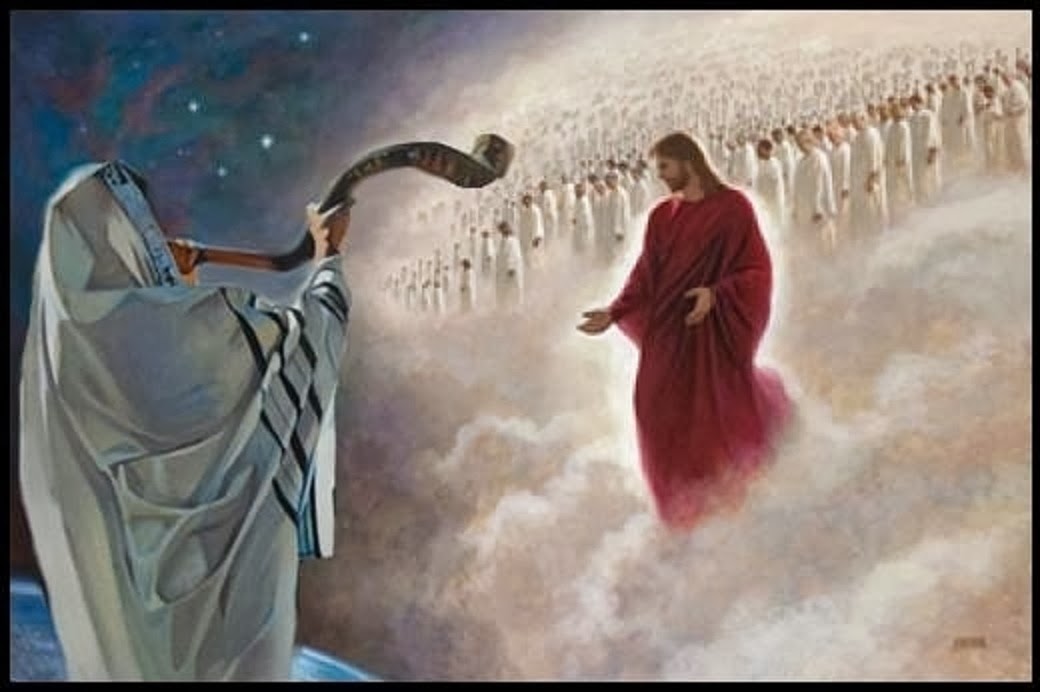
to as “all the company of heaven.”
2. They are wearing
robes washed white in the blood of the Lamb.
|
||||
|
|
a. They are baptized
in blood and wear their baptismal robes as their righteousness before God.
b. As we remember
the names of our faithful departed, and remember also those we love who have
died in the Lord, bring this image of the Revelation to mind. They are there
in that multitude.
Their “blessing” has
come to total fruition.
|
||||
 |
|||||
|
CONCLUSION: Maybe it
will reinforce the real idea of blessing we have in Christ from the
perspective of this story:
In the
church of St. Nicholas in Amsterdam, Holland, there is a wonderful chime of
bells. If you go into the tower of the
church, you will see a man with wooden gloves on his hands pounding on a
keyboard. As you listen, you hear
nothing but the clanging of the keys and the harsh, deafening noise of the
bells over your head. From that
position the bells seem to have no harmony or meaning whatever. But if you were standing out on the street
a few blocks away, you would be entranced by the beautiful harmony of the
bells.
So it is with looking at being “blessed.” So often the way
God sees being “blessed” seems less
than what we would expect. But from
the perspective of Christ and heaven we see the perfect blessing; we see the
beautiful music. Then we will see the
“blessing” without the trouble.
Amen.
|
|||||
Subscribe to:
Posts (Atom)